Wednesday, November 21, 2012

Channeling My Inner Katniss

Four years ago when I asked my stepdad if I could go along on his annual October hunting trip, he thought I was joking and started laughing. "Amber the vegetarian, hunting! Haha, good one!" he said. I had only recently starting eating red meat after 14 years of partial vegetarianism. I hadn't fired a gun in about 15 years. I don't even kill spiders (I put really big ones outside).

But I was serious. If I was going to eat meat, I wanted it to be local, healthily and happily raised (not the horrible conditions of conventional factory farming or CAFOs) and sustainably harvested. I also wanted to feel connected to the source and the process- not having meat be something only bought in a tidy, butchered package at the grocery store.

Turns out, other young people in America have had the same thoughts. Just a few weeks ago there was a NY Times article called "A New Breed of Hunter Eats, Shoots and Tells" by Dwight Garner about young urbanites hunting and writing about it.

"What feels counterintuitive and new here though is this: These writers have largely taken to hunting, they say, for ethical reasons. They’ve read their Michael Pollan and Eric Schlosser, their Peter Singer and Jonathan Safran Foer,and are intimate with the horrors of industrial meat production.
They no longer wish to have an anonymous hit man between themselves and supper. They want to thoughtfully stare their protein in the face, to take locavorism to blood-flecked new heights."
And so my step-dad and step-brother graciously had me along on my first hunt. Back in 2008 I just watched them- learned about tracking, stalking, and how to take a safe shot. Then how to field dress, skin, and butcher. The next year I took my first shot, getting a female mouflon (wild sheep). The next year I missed out while in Korea, then last year I went again. Fortunately I got another mouflon. Unfortunately, I was leaning in too close to the scope, and when I pulled the trigger, the kickback got me in the face. So my main goal this year was to NOT scope myself again.
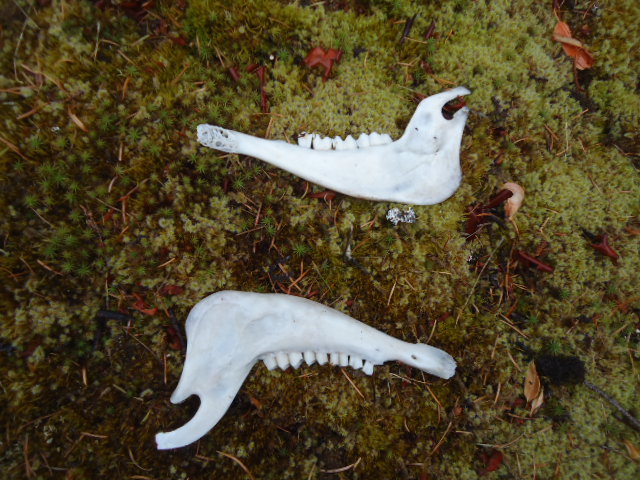
I headed out to the Stuart Island in the northwest corner of the San Juan Islands with my step-dad and a couple of his friends. On Friday we tromped around in the woods, looking for the mouflon. (There is no season for mouflon, so they can be hunted any time of year.) We found a herd quickly, but they saw us too and didn't stay still long enough for us to take a shot. I also came across these jawbones in the forest.
Saturday was the opening day for deer hunting as well as winter crabbing. We put six pots out in the bay in the morning, then got ready to go back into the woods. Remember how we had an amazingly warm and dry early fall? Well, that second weekend of October, the switch flipped. It was pouring down rain. One problem with rain is that the animals are foraging less, and more likely to be bedded down and hard to see. Luckily we were still able to find one of the herds, though they were moving quickly and I never took a shot. Our friend, hunting separately from my step-dad and I, was able to get two mouflon. After we heard the shots we went to find him and help him field dress the animals. This is the male mouflon that he got.
They guys took the animals back to the cabin to hang and skin them, and I continued to hunt for a bit, but found nothing. I went back, wet and tired. We ate lunch, drank hot coffee, and warmed up by the wood-stove. Then we went out to check the crab pots.

It was the most surprising and interesting crabbing session I've ever had. The males that were keepers had a purple sheen to their shell, more than they do in the summer. There were several crabs missing legs or a claw which was really weird. One crab was missing all its limbs on one side! One female crab was giving birth, with thousands of little orange eggs coming out of her at that moment. "Sorry mama!" I said as I gently threw her back. One crab was growing back his claw so they were different sizes.
But the real shocker was pulling up a pot and finding that a shark had wedged his way in. I knew there were Sixgill sharks in our area, but had never seen one! We kept him just long enough to snap a picture before throwing him back.

By the time we got back to shore it was nearly 3pm. The guys were winding down for the day, but I still wanted to try to get a mouflon. I knew I didn't have much daylight left. One hard thing about hunting is that there is such time pressure- you travel a long way, buy hunting tags and bullets and game bags, take time off work... and then have a small window of time to find the wild creature. So if you don't get an animal, it's a lot of effort for nothing.

I decided to head out again on my own. My step-dad suggested going back to where we had started in the morning. I went into a bowl valley, then hiked out the steep wall of the hillside to one of the highest points where you can look down into the next valley over. I found a small herd of ewes, but they were on the run. I could see their general direction down the hill, but after I lost sight I had no way to know if they went left or right.

This is one of the most interesting parts to me about hunting- the combination of the guesswork, the tracking, the previous experience, and the gut instinct. I kept walking, trying to stay focused. Hunting can be incredibly mentally demanding, as you have to think about your every move. You have to stay aware and quiet and trust that you could find the animals at any second, even if it's been hours without seeing them. If you let your guard down and tromp thoughtlessly around a bend, that's invariably the moment when you will find the herd and scare them off. My boyfriend once asked me what was so appealing to me about hunting, and I tried to explain this all to him. "So... walking around in the woods in the rain for an indefinite amount of time, carrying a heavy gun, when you may or may not find anything?" he paraphrased. "No thank you!"

But I like the challenge along with the simplicity. I kept thinking of Katniss from The Hunger Games as I walked along. The small herd reappeared suddenly, running down the hillside, but then were gone again. I sat on a log wondering which way to go. My back hurt. The grey light would be usable for maybe another half hour. I decided to walk on the road back toward the cabin, where I would have a view into the woods on either side. I kept reminding myself to stay quiet and think about each step... then there they were, the small herd I had seen twice joined with another herd. They saw me but seemed less skittish as they tentatively continued grazing. It felt weird to fire a gun alone, but I couldn't miss this chance to take a shot. I steadied myself against a tree, telling myself to breathe and stay well away from the scope!

I shot a female mouflon who walked a short ways before dying. I hope it was as short and painless as possible for her. I said a prayer of thanks as I stood over her, full of gratitude. Then I jogged back to the cabin to get my step-dad. I have helped field dress, but have never done a whole animal by myself. He and his friend verbally walked me through it, and I did everything myself, getting out all the organs and blood as the body steamed its pungent smell into the cold dusk air. Then back in the shed at the cabin I skinned her so she could hang for several days.
Back at home I butchered the mouflon, for the first time not really needing any help. I cut some steaks, some thin slices for jerky, some chunks for stew, and a bit for grind. It was all nicely separated, but then in a labeling mishap did not get labeled properly. So now the meat is in the freezer, and I will gladly have you over for dinner to try it, though we may not know what cut of meat it is until it's defrosted.

Monday, November 5, 2012

Master Composter, Part 1: What is this Program? Plus, Zoo Doo!

In April I did the Master Composter/Soil Builder program through Seattle Tilth. So... what exactly does that mean?!

Once a year in the spring, Seattle Tilth partners with the City of Seattle to provide a 4-week, 28-hour compost training to 30 city residents. Here's a description on Seattle Tilth's website:

"The Master Composter/Soil Builder volunteer program is a key partner in Seattle's waste reduction and recycling efforts. We help city residents to recycle food and yard waste at their homes, build healthy urban soils, and support thriving landscapes throughout the city."

Over those four weeks, we received training on topics such as food scrap composting, hot and cold yard waste composting, basic soil science, compost biology, urban stormwater management, and proper sorting of compostables/recyclables/garbage. We met twice a week: weeknight evening classroom sessions, and then hands-on Saturday classes at the Rainier Beach Urban Farm and Wetlands.

It was an enjoyable and incredibly educational month of training. On the first day of class, we introduced ourselves and had a chance to hear why other volunteers were doing the program. There was a woman who was concerned that faith organizations weren't encouraged enough to compost, and wanted to help start a compost system at her church. There were several people who described themselves as in "IT recovery", recently quitting tech jobs and feeling drawn to get outside and get their hands in the dirt. There were landscape architects and Master Gardeners who wanted to broaden their knowledge. There was one man who admitted to having "really stinky compost and just wanting to know what to do." We ranged in age from our 20's to 60's, with a wonderfully diverse set of backgrounds and life experiences.

(Turing our compost pile on a drizzly Saturday)
So after all that training, then what? We have one year to do any kind of public outreach or education related to compost inside the city limits. It could be helping apartments get compost bins, setting up compost at a local P-Patch, teaching elementary school students how to separate their lunchroom compostables, writing articles for a newsletter, or teaching a community class. For me, I enjoy talking with the public at info booths, so I've volunteered at the Fremont Fair and Seattle Tilth's Edible Plant Sales and Harvest Fair. I also helped at one of the summer's Zoo Tunes concerts at the Woodland Park Zoo, which is a great way to see big-name acts (Los Lobos, Ziggy Marley, Melissa Ethridge, Rosanne Cash) while doing community service.

Most recently I volunteered on a pick-up day for Zoo Doo. Zoo Doo is the composted waste from herbivore animals at the Woodland Park Zoo. The nitrogen-rich doo is mixed with the carbonous bedding (woodchips or straw) already in the animals' cages, and voila! After six months you have a safe and nutritious locally-made compost. The WPZ has been making Zoo Doo for over 25 years. TWENTY FIVE YEARS! I think they were way ahead of their time in thinking about minimizing their waste, and the bonus is that it saves them tens of thousands of dollars annually in disposal costs. Win-win!

So now twice a year, in March and September, Seattleites can enter a drawing to win the chance to buy this compost. You have your choice of a compost which is good for veggies and annual flower beds, or a more wood-chip heavy mulch for perennials, shrubs, and fruit trees. Currently, if you enter the drawing for Zoo Doo, you have about a 50% chance of getting it. Then you come to zoo at your assigned time slot, and load up whatever amount you signed up for, either into a pickup truck, buckets, or bags.


There were landscapers, casual gardeners, and elementary groups starting school gardens. It was a fun event to help with, and I really enjoyed seeing Seattle residents so enthusiastic about using this great and unusual compost.

Saturday, November 3, 2012

Day of the Dead

Happy Day of the Dead! Well, it was yesterday. It is one of my favorite holidays, though this year I was a bit tired and not up to my normal Day of the Dead preparations. Usually I make my own pan de muerto (dead bread), tissue paper flowers, and set up a little altar to honor family and friends who have passed on.

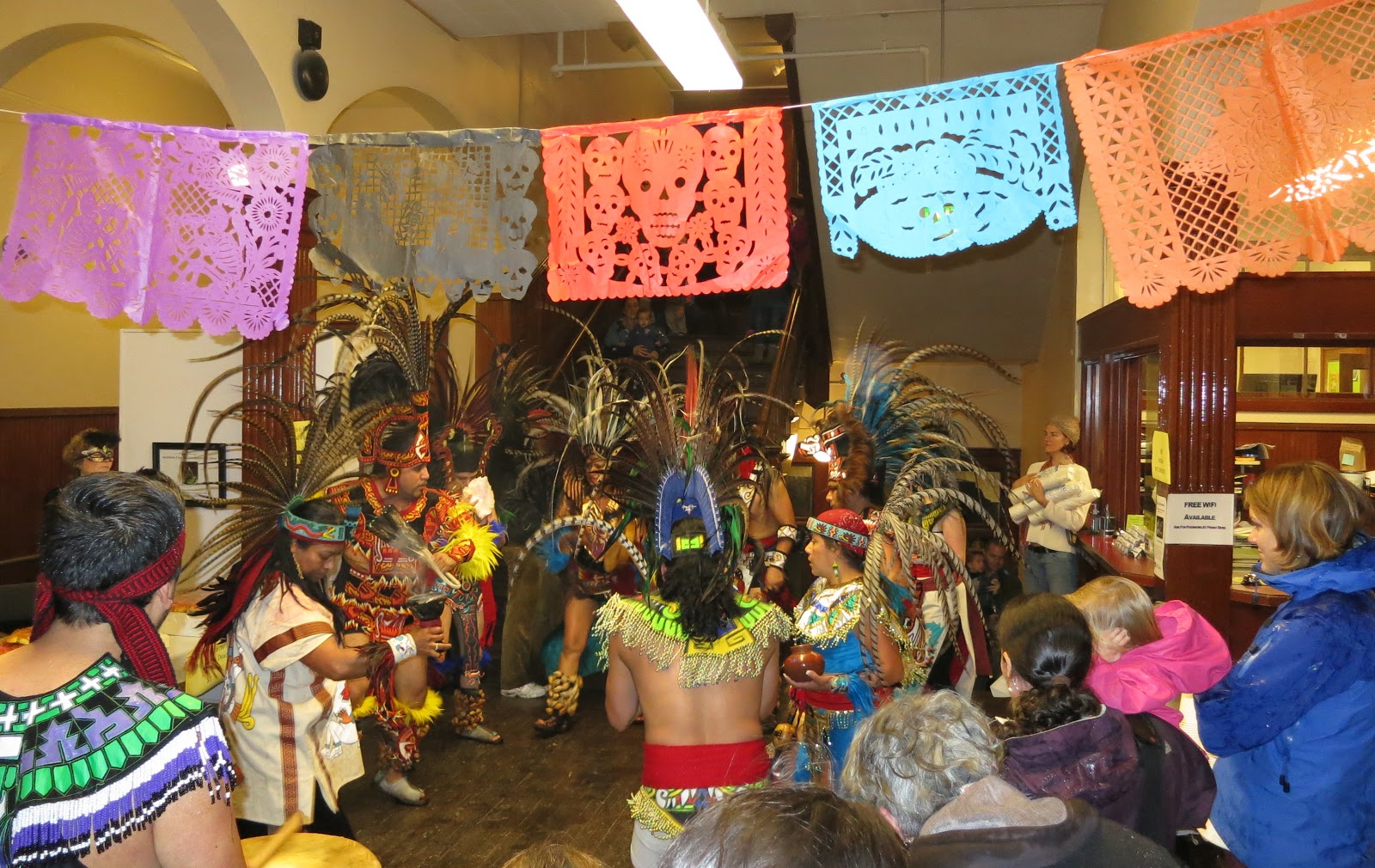
Luckily there was a community event hosted by the Phinney Neighborhood Association. It started with a procession around the neighborhood- Aztec dancers, a drummer, and families with little kids all tromping down the sidewalk in the pouring rain. I walked along, holding my electric candle, thinking a lot about my grandparents and my dear friend Eric, who died way, way too young a few years back and I still miss all the time. Back at the community center, there were more performances, dead bread, Mexican hot chocolate, and a community altar that people could add photos or remembrances of loved ones.

Did any one else out there celebrate Day of the Dead?

Monday, October 22, 2012

Honey Harvest

I started keeping bees for my first time in April. I know just enough to know what amazing little creatures they are and that there is still so much to learn. I did everything I knew of this year to keep them happy- good hive placement, feeding them sugar water, keeping a water dish filled, checking the hive regularly but not too often, adding new frames/boxes at the proper time, and planting flowers that they love in my yard. But even for super experienced and knowledgeable beekeepers, there is a good chance that your colony will die or swarm. I had a few moments of fear over the past few months, wondering if the hive was okay...

I haven't seen the queen in months! I saw the queen easily in the spring, when the hive was at about 10,000 bees. But later in the summer, the populations gets up to about 50,000, so she's harder to spot during a hive inspection. I saw signs that she was alive and well, such as larvae and young bees, so I had to just trust that.

There is comb being built below the frames! And when I removed the frame it ripped open the larval cells! Turns out that just happens sometimes.

The comb in the brood chamber (bottom box) used to be white, but now it's dark brown! Weird right? Nah, that's fine too. That comb is the oldest, so the bees have used it more and been walking on it. It just gets stained from wear and tear.

I saw my first swarm this summer while driving down Phinney Avenue. There was a dark cloud over the road about 20 feet in the air and I was like, "What IS that?" It wasn't until I was right underneath that I realized it was bees. "Oh my gosh, what if they are MY bees?!" I knew it was unlikely, but that didn't stop me from running into the backyard as soon as I got home just to make sure I saw activity at the entrance of the hive.

Thankfully, my bees never swarmed, and they are still alive and well in the hive. They made a solid amount of honey, though nothing in the fourth (top) box. The top box is traditionally the "super", or excess, or what you could safely harvest. Even in my novice calculations, I didn't think there was enough for me to safely harvest much honey this year. It is more important to err on the side of caution and leave plenty for the little ladies to get through the winter. Yes, we are already thinking about winterizing in bee world, as the nectar flow has vitually stopped with no flowers blooming, and bees don't leave the hive when it's below 55 degrees F. So as soon as our cold, wet fall weather hit, the bees started hunkering down and focusing on keeping the queen warm.

I did a hive inspection before this happened, to removed the top box and add a heavy sugar water to the inside of the hive. I also wanted to at least sample the honey, so I removed one frame that was only partially capped. (Bees build the comb, then make the honey in it, then when it's the perfect moisture content at 18%, they cap the comb cell so you know it's finished honey). Here you can clearly see the difference between the capped and open cells.

(Photos by Matt Freedman)


I also wanted to practice processing the honey since I've never done it before. I used a tool conveniently called a "capping scratcher" to scrape the caps off the comb. Then I let the honey drain out into a glass pan for a couple days. That left me with pure, raw honey with bits of wax in it, so I let that run through cheesecloth for another couple days. Now I have my first tiny jar of my own backyard honey!

Friday, October 19, 2012

Mount Saint Helens

Mount Saint Helens was the fifth highest peak in Washington state before it erupted in May of 1980. An earthquake triggered the eruption, which shot ash over 14 miles into the sky, collapsed the northern flank of the mountain, and created a debris avalanche that is said to the be the largest in recorded history. The Wikipedia article calls the eruption the "deadliest and most economically destructive volcanic event in the history of the United States." (Photo from Wikipedia, by Austin Post from USGS)
The massiveness of the eruption, combined with the fact that it happened two years before I was born, has always made the event somewhat mystical in my mind. I wish that I had been alive to see it. My dad tells me that he was working with my grandpa that day (my mom's dad), following his white carpenter van. They were driving down Wallingford Avenue in Seattle, around 40th, going downhill where you have a direct view toward Lake Union and Mount Rainier (on a clear day). My grandpa pulled over to the side of the road so my dad did the same. "What is it, Ed?" my dad asked, who hadn't yet seen the column of ash and smoke to the south.

I think part of what makes this natural disaster so striking is that it is still so visible today. When there are earthquakes or floods or hurricanes, they do damage, but then we clean it up and rebuild. But at Mount Saint Helens, the whole north side is still gone, it is still 1,300 feet lower, the mountain is still covered with ashy rubble scree, lahars flank both sides, forests are gone, and pumice is scattered throughout the area. 

I've always wanted to see these remnants, and peer into the smoking crater. From May through October, the Mount Saint Helens National Volcanic Monument limits climbers to 100 per day. Back in June, all the permits were already gone for every weekend until mid-September. Weekdays were full a few weeks ahead of time. The summer flew by and it made more sense to try to go after Burning Man, on a weekday in early October. Matt and I didn't want to get permits too far in advance because we didn't want to climb in the rain or if there wouldn't be a view. Luckily, the clear, dry weather was holding and we were able to get permits a couple days ahead of time. 

We had a pretty good idea what to expect from the trail description, the only advice different from other hikes being to bring gloves to protect your hands from the sharp rocks you have to climb over. We got a fairly early start, driving to the trailhead just after sunrise.
The climbing route is from the south side of the mountain, bringing you to the rim of the crater in five miles and 4,500 feet of elevation gain. The first two miles of the trail are on an easy, forested hiking trail. Then once you get above the tree line, the trail becomes wooden markers in the rubble. Sometimes it's a path, but mostly it's picking your own best route over rocks.
Other parts of the trail were gigantic boulders that you had to climb over. It was a constant puzzle figuring out the best route, and not climbing up a boulder that was going to be too steep to get down on the other side. Once that portion ended, it was an open ash-sand, which presented its own difficulties. Think about walking in sand, but on a steep slope. It was slow-going. Also, it was incredibly windy, possibly the windiest weather I've ever been out in. There were gusts at times of probably 40-50 mph. It made walking very hard, plus was painful to have the sandy particles pelted on your face. I had a face gaiter and Matt used a bandana. Luckily I had wrap sunglasses, but Matt had his prescription sunglasses so dust kept getting in his eyes. We both wished we had desert goggles, it was seriously that bad. We passed quite a few climbers who weren't prepared for such extreme weather and had turned around before the summit. Mostly they were too cold. Even those of us making it to the top would look at each other and say, "This is crazy!"

I've done longer and steeper hikes, but this was one of the hardest I've ever done. Partly due to the wind, and partly the fact that walking on volcanic scree is slow and mentally challenging. This hike would have been 10 times easier in the snow, and I would highly recommend doing it in the spring or summer before the snow has melted out. Not only is it less to navigate as you go up, but would obviously be a lot faster coming down to glissade, ski, or snowboard. Also, it turns out that hiking on ash is, well, ashy. Our clothes and backpacks were covered in the dust, and it makes you feel parched and dirty.

But all that aside, it was an incredibly beautiful early fall day to be out. There was a haze from the forest fires, but we could see Mount Hood on the way up, with Mount Jefferson just visible beyond it.
We finally made it to the top, and here you can see Mount Adams to the east poking out above the thick layer of smoke.
Here is the inside of the crater, looking directly north to Spirit Lake and Mount Rainier. In the picture you can't really see the smoke coming out of the crater or the glacier inside, but there was quite a bit going on in there. 
You could also see straight over to the Johnston Ridge Observatory which is the main interpretive center for the mountain. Since it is way on the north side we didn't have time to go there, but I definitely plan on going back to experience Mount Saint Helens from the other side.

Sunday, October 7, 2012

Feasts of Fall

I was so busy this summer between working, going hiking on weekends, and getting ready for Burning Man, that I didn't get to do as much cooking and preserving as I would have liked. But now that fall is officially here, and harvests can't be put off any longer, I'm making up for lost time.

For example, I went from "Boy it would be nice to get my hands on some plums" to "OH MY GOSH I can't handle any more plums!" thanks to generous friends and parents sharing the bounty of their trees. Turns out a few grocery bags of plums go a long way. I pitted and froze a bunch, and did a couple rounds of canning plum chutney and sauce. I also made some plum desserts, mostly a tart recipe from my friend Maria which includes dried cherries and Grand Marnier.

I pulled out all the potatoes from the garden, and those will mostly just hang out in the basement until they get roasted, sauteed, or mashed. I did however grate a couple bags to freeze for quick hashbrowns, which I've never done before but seems like a good idea.
Hey, pop quiz! When is Mexican Independence Day? You might want to say Cinco de Mayo (May 5th) but think it can't be that obvious. If you've traveled much in Mexico, you probably noticed at some point that every city has a street named El Dieciseis de Septiembre (September 16th). That's because September 16th is Independence Day! Any idea what the traditional Independence Day food is? It's Chiles en Nogada, which is a dish of poblano chiles filled with shredded meat and spices and topped with a creamy walnut sauce and then pomegranates. I ate it years ago in Mexico and really liked it, and since then have always wanted to try to make it myself.

Unfortunately, in the years since I ate that dish, I've developed an allergy to tree nuts.

The second most common dish associated with Independence Day is mole, which I also love. Saying "mole" is sort of like saying "curry"- it's a sauce of many different ingredients, with a million different recipes and regional variations. During the multiple times I traveled in Mexico in 2005-2009, I ate as much mole as I reasonably could, from the dark brown Mole Poblano of Puebla, to the yellow and green Oaxacan moles. 

When I was studying abroad in college in Morelia, Michoacan, my friend Catherine's host mom asked me what my favorite Mexican food was. When I told her it was mole, she offered to make it for me and have me over for comida, the large afternoon meal of the day. I remember sitting around their table eating the delicious mole, thanking the host mom for making it. She repeatedly told me how much work it was: "He estado cocinando todo el dia! Mas que cuatro horas en la cocina!" (I've been cooking all day! More than four hours in the kitchen!) She wasn't put out or trying to make me feel guilty- just simply being matter-of-fact.

This year for Mexican Independence Day, I decided to finally try my hand at a version of mole. I found this recipe which I thought fit the bill, as it was 1) for Mole Poblano which is my favorite, 2) in Saveur which is reputable, and 3) by Rick Bayless, whose take on Mexican cooking for Americans I have long admired as authentic while still accessible. I hit up a local Mexican grocery store for the chiles, pepitas, tomatillo, tortillas, and chocolate. Then I began the long process of stemming and seeding the chiles, flash frying them in oil, soaking them in water, and toasting and grinding the spices by hand. Then I blended the chiles, soaking water, and chicken stock and strained it... and that was just the first day. 


On day two you fry a bunch of ingredients in the chile-infused oil: tortillas, peanuts (I left out the almonds), pumpkin seeds, and raisins. Then there is the whole process of sautéing the onions and garlic, adding spices, cooking the tomatillo and tomatoes, blending this batch, straining...
There was even more work after that, including an hour and a half of reducing and stirring, pan frying the turkey, AND THEN baking it all for another hour. I hadn't known exactly what I was in for when I started cooking, but the whole time I just kept remembering Catherine's host mom with new waves of appreciation.

Luckily, I was really happy with how the mole turned out. It tasted legit! I subbed chicken for turkey and it came out perfectly moist and so flavorful. Other Spanish-speaking friends came over for Independence Day dinner, which was really just an excuse to eat Latin-inspired food. Not only were they appreciative of the mole, but they brought delicious dishes of their own- fried plantains, beans with fresh queso blanco cheese, Spanish tortilla, goat cheese-stuffed dates, and hand-made tortillas. There is much more cooking to come this fall, though I think I'll wait awhile before taking on a recipe that involved.

Tuesday, September 25, 2012

Whistler

Last weekend I was supposed to hike the Enchantments in the Alpine Lakes Wilderness of the Cascades. But there are huge forest fires burning right now in eastern Washington, and there are fires close to Leavenworth that have closed the trail. Even if the trail had been open, we would have postponed the trip, not wanting to do a huge hike in awful air quality and poor visibility. We rescheduled for two weeks from now, hoping the fires and air clear up by then. If not, we may have to put off the hike until next year.

Left with the weekend unexpectedly free, my honey and I decided to go to Whistler, BC. I had never been there! I don't ski or snowboard so I never had a reason to go in the winter. I thought about going to the Olympics in 2010, but I was getting ready to move to Korea and a bit deterred by the cost and the crowds.

There was plenty of lodging available with a few days' notice, and the weather was forecasted to be clear and warm. We left early Friday morning and had almost no wait at the border. Our condo was right in the heart of town, complete with a balcony and well-equipped kitchen. We had burgers and salads for lunch, then went to check out the ziplining tours. Neither Matt or I had ever been ziplining but were both curious to try, so we signed up for a trip that afternoon.
We had a lot of fun. The guides were very experienced and efficient, fitting us into harnesses while chatting away. They were also naturalists and explained a bit about the coastal temperate rain forest that we were in, and unique features of the flora and fauna. Some of the area was in was old growth forest, and at one point we were walking across a tree platform around a 700 year-old Douglas Fir, about 100 feet off the ground.

They started us on a short line, with each zipline getting progressively longer until the 5th one. It was a beautiful crisp evening as we zigzagged back and forth across the Fitzsimmons Creek, which separates Whistler and Blackcomb mountains. The last line literally takes you right back into the village.
Once the sun went down it got a bit chilly so we ducked in to the Longhorn for a hot plate of poutine (french fries, gravy and cheese curds) along with a local beer.

On Saturday morning I made us breakfast and coffee. There was a low cloud cover and we couldn't see the mountains at all. But we were determined to get decent views and a good hike in, so we hopped on the gondola up to Roundhouse.
It's quite a long way up, nearly a 25 minute ride. We went through the clouds and voilà! came out on top of the world with the peaks sticking up through the white. It was quite a lovely sight.

From there there is a short walk and then the Peak Express chairlift to get to the very top of Whistler. Peak Express was closing the next day until ski season, making us realized just how well we timed this visit- it was the off season enough that prices were lower and places weren't as crowded, but still close enough to summer that it was warm and things were still happening.
From the top there are amazing views of the surrounding mountains. It sort of blew my mind that we were able to just ride to the top. But we smelled forest fire and couldn't help but notice a haze in the air. Were there forest fires in BC? We hadn't even thought to check. It wasn't until the next day that we found out the smoke we were seeing was from the eastern Washington fires! Here is a MODIS satellite image from the Cliff Man Weather Blog. You can see the big cloud of smoke, the the long arm going northwestward into Canada.
We set off on the High Note trail, a 6-mile hike around the back of Whistler, with views of unique peaks like this Black Tusk on the right. It could have been clearer, but otherwise the weather was amazing, warm but not hot, breaks of sun here and there.


I even went swimming in one of these little lakes, not bad for the first day of autumn! The trail took us back down to Roundhouse, where we caught the Peak to Peak gondola over to Blackcomb. We walked around more before taking the very last gondolas back down. We were a little tired and ready for a snack before dinner- yep, poutine and beer again.
On Sunday morning we rented full-suspension mountain bikes. We originally thought about doing downhill in the bike park, but it looked a little too intense and we didn't really want to take a lesson. Plus, as fun as it is to put your bike on a lift and just ride down, we were looking for more exercise than that. So we did a huge loop on some of the easy and intermediate cross-country bike trails, making our way up to Lost Lake on the Zappa trails (all trails named after Frank Zappa songs). We also heeded the very useful signage on the trails.
I wish I had been able to spend more time at the lake. Sunday it was clear and in the mid-70's, and I really would have liked to hang out longer and go swimming. But we had to get back on the road by a reasonable time. All in all, a really great weekend and a good intro to summer activities at the resort. It's not the type of trip I usually take, usually opting for wilder and less-developed places, but I'm glad I finally got to experience one of our area's gems.

Sunday, September 16, 2012

Burning Man

I'm back from Burning Man, a week-long art festival in the Black Rock Desert of Nevada. There is so much to say about it, I hardly know where to start. Overall verdict: Amazing. I was so impressed by the scale and caliber of all the art, and the sheer effort of all participants to make an event like this happen. There are Ten Principles of the event, which gives a good insight into what the event stands for. Not only are the Principles on the website, but every participant sees them in the Survival Guide (required reading) when they get their ticket in the mail.

-Radical Inclusion- any one can be a part of the community
-Gifting- I've had people ask me about what I was planning to trade at Burning Man, but the idea is to give unconditionally with no expectation of a return or exchange
-Decommodification- the community is not mediated by corporate sponsorships or advertising
-Radical Self-Reliance- discover and exercise your inner resources
-Radical Self-Expression
-Communal Effort- creative cooperation and collaboration
-Civic Responsibility
-Leaving No Trace- respect for the environment, cleaning up after yourself, and leaving no physical trace of activities. Burning Man is the LARGEST Leave No Trace event in the WORLD! How cool is that?
-Participation- transformative change, whether in the individual or society, can only occur through personal participation. Every one is invited to work, play, and do. This speaks to the idea that there are no "spectators" at Burning Man.
-Immediacy

So what exactly does that all end up looking like? There are clearly 54,000 different experiences for every person there. With that many people for a week, Burning Man is more of an experience living in a city than just going to an event. It's like going to a city you've always wanted to visit, and discovering that you're a citizen, a homeowner, and can start any business you want. For that week, Black Rock City becomes the sixth largest city in Nevada, only to disappear without a trace. Here is an aerial view of the city from the side: (Photo by papertygre)
Here is a map from the Burning Man website of the city layout:
The open space in the middle is the Inner Playa, with the Man in the dead center. You can see four main radial points going out from the man to designate Noon, 3, 6, and 9 o'clock. Going up to 12 o'clock from the Man into Deep Playa is the Temple, and down to 6 is Center Camp. The inner ring street is the Esplanade, and each circular street out is named by letter- A, B, C, D. This year, since the theme was Fertility 2.0, the street names were after flowers- Alyssum, Begonia, Columbine, Dandelion, etc. As the event has grown, so has the number of circular roads out, up to L (Lilac) this year.

The man is visible from pretty much everywhere in the city. He is around 30 feet tall on a 40-foot platform, and gets lit up for the night at dusk. You can always stay fairly oriented as to your location as long as you can see the man.
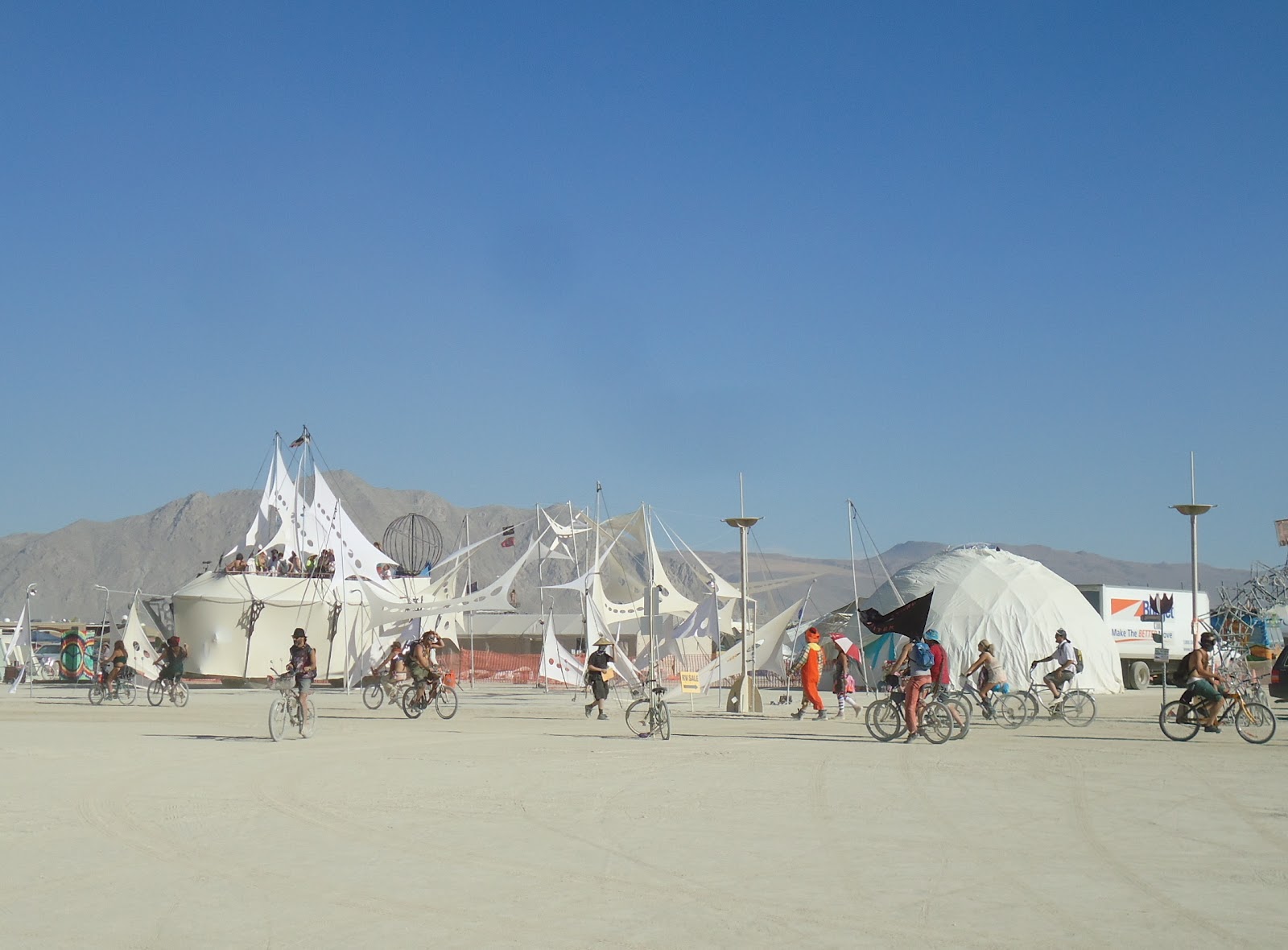
Matt and I were fortunate enough to get Early Arrival passes, both to help our theme camp set up and to attempt to avoid the crazy long lines of tens of thousands of people arriving on the same day. The camp mates who had arrived earlier had already gotten a ton done, but our whole first day we basically got settled in, setting up our tent area, plus helping with erecting and decorating the camp dome, fence, and art car. Here is the front of our camp, lucky enough to be assigned a spot right on the Esplanade.
Each day was totally different and fairly unpredictable- Who would you meet? What would the weather be like? How would you feel? The things that always remained the same though were that there is always so much to do and see. There is big art, but also just the time and care that goes into costumes and decorating bicycles is incredible. Here is an approximate "day in the life" of what a typical (if a bit full) day was like for me at Burning Man...
*          *          *          *          *          *          *          *          *          *

Some mornings I sleep in until 8 or 9, but today I wake up early around 6. Matt is already dressed and leaving, wanting to be outside to take photos in the dawn light and sunrise. I leave camp a bit before 7 to ride my bike to the Man and meet a running group. There is a thick little booklet with a schedule of events, and it said that people met every day at 7am to run the perimeter of the event. Luckily I find them, from a guy who hadn't slept yet to a girl who is here on her honeymoon to another guy who is planning to run a 50K race at Burning Man the next day. We run nine miles around the fence in the cool of the morning, from deep playa to the airport to the entrance around the camps and back. 
This might be the best time of day in Black Rock City. Plenty of people are still up from dancing all night, and art buses are still pumping music. There is a lingering energy but a new freshness as the sun casts a golden light and before it gets too hot.

I ride back to my camp and Matt has also returned from shooting. We sit down to breakfast where other camp mates are already making bacon, pancakes, and coffee. At 10 a bunch of classes are starting, like Pirate Yoga, Hula-Hoop making, and Aerial Silks. I opt for silks because it's the closest and I want to learn more. The class is helpful and I see some beautiful performances by aerialists from all over the west coast. After, I start to ride back to camp, slowly on the dusty bumpy side roads, and some guys call out asking if I want peanut M&M's. So I stop and join them on their inflatable furniture under a shade tarp and we start chatting. They are Germans and New Yorkers, and we proceed to have a great conversation about everything from speed limits for fuel conservation to Gangnam Style. Back at camp Matt and I have lunch- sandwiches and fruit and pickles. I find that I really crave kimchi and pickles on the playa. I think I need the salt from sweating so much, and the acidic vinegar after all the alkaline desert dust. I'm feeling a little tired from the active morning, so we stretch and doze in the almost-too-hot tent. We also do some self-care: baby-wipe bath, lots of lotion on our dry skin, neti pot for sinuses, and hydration drinks.

By this time of day it's in the 90's and though it's a dry heat, feels relentless. I am refreshed though, and make sure my camelback is packed with the essentials- water, sunscreen, desert goggles, handkerchief, my own mug, travel-size baby-wipes, sunscreen lip balm, pocket knife, tissues, event schedule booklet, pen, ID (yes the bars are supposed to card), a tiny bit of cash, and MOOP ziplock bag. (MOOP is Matter Out Of Place, and means any trash on the desert floor or anything that is leaving a trace and shouldn't be there.) I never venture out of camp without these items. 

Matt and I jump on our bikes ready to go exploring. If we wanted to read the schedule, we could go to salsa class, a banjo performance, a French cafe, a bellydance flash mob, a mojito bar, a water slide, a literary discussion, a critical mass bike ride, an udon noodle stand, or a foot wash day spa. For now I'm thinking about finding some iced coffee and not making too many other plans. 

We go across town to where there is supposed to be Vietnamese iced coffee, but there is no one there. Of course, with never a shortage of things happening at Burning Man, there happens to be a camp right across the street giving away root beer floats. The cold ice cream is such a treat. As we sit there, the Nevada State Health Department is inspecting the food-service operation. Yes, camps serving food still have to abide by state health regulations as we are in an actual city, and I saw camps being inspected more than once. We still want coffee though, so we stop by the cafe at Center Camp, one of the very few places at Burning Man where money is exchanged. I like Center Camp a lot- it's like the community living room. Shaded but with open walls, there are benches and chairs to hang out on, people doing massage, practicing acrobalance, performing on the small stage, filling out the census, napping, and looking at art displays.
After the caffeine fix, we ride down the Esplanade to a huge tower I've been wanting to go up. It's at least 50 feet tall and has great views of the city.
Then we ride out into the open playa to look at art. As the week goes on, more pieces get put up and finished, so there are always new things to see.
There is anything from sculptures to look at...
...to huge, life-size art pieces you can interact with, like this incredibly realistic shipwreck, complete with dock, dinghies, and hammocks...
 ... to tons of art cars driving around. Once you arrive at Burning Man, you are not allowed to drive your car until you leave, so the only motorized vehicle are approved art cars and emergency/service vehicles.

 Just as we getting way out into Deep Playa and feeling really hot, tired, and dusty, we find an oasis.
We rest for a while on the couches in the shade of "trees", drink water, chat with other people. We need to get back to camp to help with a camp Happy Hour, plus the dust is kicking up. Usually in the hottest hours of the day, there would be little dust storms. You definitely need goggles and some kind of mask, but there was only twice when they were more than minor inconveniences.
Just as many other camps offer services, entertainment, food, and/or drinks, our camp also planned on hosting something. Today we are doing a Happy Hour, offering a swamp-cooler-cooled dome space, DJ, open bar, and homemade salsa with chips. I help to bring in passers-by off the Esplanade and dance in the dome.
The party is winding down at dusk, and neither Matt or I can resist the light. We hop on our bikes to take a quick ride to the Temple and the Man in the fading light.

The Man is the focal point of the city, and the temple is a beautiful, sacred space. It's hard to imagine that in a few days the man will be burnt to the ground, and that the temple will have the same fate the night after. But for now, we enjoy their short and sweet existence.

Back at camp it's dark and tonight's meal team has already gotten dinner ready. Most of the dinners were made before Burning Man, vacuum-sealed, frozen, and kept in the cooler so that the meals only need to be reheated. With so much happening during the days and the limited water for dish washing, it's really nice to eat good food but not actually have to cook on the playa. Plus, there are about 65 people in our camp sharing meals, so that would be a lot of cooking even in a non-desert setting!! Tomorrow it will be our turn to feed the clan the gallons of chili we made, but for tonight I'm very grateful for some one else's work- pasta bolognese.

After dinner we help make sure the kitchen is clean, make a cocktail, and straighten up the tent a bit. We change into evening clothes (jackets, pants) because it can definitely get cold out there. We trade out our shade desert goggles for clear night-time goggles. We refill our camelback and make sure we have a MOOP bag. We light ourselves and our bikes with headlamps, blinky lights, and glow sticks. It's very dark at night in the middle of the desert, and with all the art cars and bikes it's important for safety to be well-lit at night.

At night it's like a whole new city. Art cars that weren't that spectacular during the day look amazing with their lighting. Or they are designed to spout fire which is also more interesting in the dark.

There are fire dancers, art cars blasting music, music camps with big DJs, and countless small projects and performances to interact with. There are tons of mobile bars and camp bars giving out drinks. Imagine the best nightlife you've seen on a single street, then multiply that by a whole city.
We dance a little and see a bunch of cool sights, but eventually I get tired. It's been a great day, but a long, active, dusty, hot one, and I want to be rested for whatever I find to do tomorrow. We head back to camp while everything is still in full swing. In a way I feel like I'm missing out, but really I'm still in the thick of it as the music will blare all around me until 6am, and I can listen until I fall asleep on my thermarest.

*          *          *          *          *          *          *          *          *          *

This is a great Aerial Video with good visuals of what the different parts of the city look like. This video Oh, the Places You'll Go is from 2011 and its popularity increased the awareness of Burning Man in the mainstream more than ever. For amazing photos, check out Scott London's 2012 Burning Man photos.