Saturday, April 13, 2013

Bad News For the Little Ladies

In the dark, damp winters of the pacific northwest, I think we are all trying to just make it through until spring. It's the same for the bees- they work hard all spring and summer making honey because they are going to hole up most of the fall and winter once the flower nectar is gone. They don't hibernate, but they generally don't leave the hive when it's below 54 degrees outside. Instead, they cluster together in a ball and fan their wings to generate heat, keeping the inside of the hive a toasty 93 degrees. So once the cooler weather came last October, I did what I could to prep the hive for winter, closed the lid, and hoped for the best.

Since you can't open the hive when it's cold, you just have to observe what you can from the outside. I started seeing a lot of dead bees in front of the hive, which is normal. Their population gets up to 50,000 or more at the height of summer, then will drop back down to around 20,000 in the low of winter, and these hygienic little creatures will not leave dead bodies inside the hive. I also noticed mold on the untreated wood of the inner cover. I put sticks in between the inner and outer cover to prop it up and create some ventilation. I drilled holes in the bottom screen board and slightly tilted the whole hive forward in case there was any condensation that needed to escape.
But by the sunny days in February and March, I wasn't seeing any activity at all- no solitary scout bees out flying, no new dead bees outside the entrance. When I finally peeked inside on one of our warmer late-winter days, I was devastated to find that the colony had not survived. It was terrible. There were petrified bees half-inside the comb cells, and a pile of dead bees on the screened bottom. There was larva half-developed that had turned to a stinky caramely goo. It was like a bee horror movie.

When I told friends over the last few weeks about the loss, they usually ask, "Why did they die?" Ha, that is the million-dollar question! It's hard to say exactly. I know my hive had a lot of moisture in it and subsequent mold, but I'm not sure how much that may have weakened them. I already have a plan for a few things I would do differently next fall in winterizing the hive. What I do know is that it was a really hard winter for bees in general. Many experienced beekeepers that I talked to lost a shocking number of hives this winter.

There's been a lot of coverage in the news over the past few years about Colony Collapse Disorder and the dwindling numbers and vitality of many kinds of bees. For decades it's been a mystery, with many factors being considered. In the Global Research article Genetically Modified Crops and the Decline of Bee Colonies in North America originally published in 2008, scientists looked at the possibility of Varroa mites, parasites, cell phones, and genetically engineered "terminator seeds" as culprits. They concluded at that time that genetically engineered crops were the biggest problem. Also, a nifty US crop pollination chart:
However, it wasn't until about a year ago that more conclusive evidence started coming out linking agricultural pesticides to the disappearing bees. At the end of March last year, the New York Times published an article about bees and neonicotinoids, which wikipedia describes as "a class of neuro-active insecticides chemically related to nicotine. The development of this class of insecticides began with work in the 1980's by Shell, and the 1990's by Bayer... Neonicotinoids are the first class of new insecticides introduced in the last 50 years, and the neonicotinoid imidacloprid is currently the most widely used insecticide in the world." 

In that article, Two Studies Point to Common Pesticide as a Culprit in Declining Bee Colonies, it says, "The authors of both studies contend that the results raise serious questions about the use of pesticides, known as neonicitinoids." It goes on to say, "But pesticides are only one of several likely factors that scientists have linked to declining bee populations. There are simply fewer flowers, for example, thanks to land development. Bees are increasingly succumbing to mites, viruses, fungi, and pathogens."

So we finally are starting to get a handle on the causes of the bee epidemic, namely genetically engineered crops and insecticides. But there needs to be a lot more research.  Research should probably not be conducted by one of the largest producers of pesticides and GE seeds, right?! But in April 2012, there were reports of just that when Monsanto Buys Bee Research Company.

Here is another good one from September of last year, Bee Deviled: Causes of Colony Collapse Disorder. Author Annie Spiegelman writes, "If you're not a huge fan of the bee, why should this matter to you? Well, if you like to eat food, you should be concerned. Besides gathering nectar to produce honey, bees pollinate agricultural crops, home gardens, orchards and wildlife habitat... It's estimated that about one-third of the human diet is derived from insect-pollinated plants, and three-quarters of all plants on the planet depend on insects or animals for pollination." She goes on to interview the co-director of the Pesticide Action Network about neonicotinoids.

Then February rolled around, when beekeepers from every U.S. state drive millions of hives to California to help with the largest pollination effort in the world. Any idea what crop that is for? You could probably guess from the chart above: Almonds. But this was an unprecedentedly terrible year for commercial beekeepers losing hives. Before Colony Collapse, it was normal to lose 5-10% of your hives. Then by 2005, one-third losses were becoming the norm. But this winter, it was up to 40-50%. This is a recent article from a few weeks ago specifically about this issue, Mystery Malady Kills More Bees.

And in early April this same issue of the massive pollination fail for almonds in California was addressed in Dan Rather's "Buzzkill". If you don't read any of the other articles in this blog post, I would HIGHLY recommend watching this informative segment. It's about 50 minutes long but good all the way through. And I couldn't help but think: buy almonds now. My prediction is that the price will skyrocket soon as this was the first year without enough bees to pollinate and the harvest will surely be much smaller than usual.

So, that's my attempt to answer the question as to why my bees died this year. Both backyard and commercial beekeepers are looking at a one-third loss as standard for any year. In fact, the beekeeper/supplier I bought my equipment from recommends starting with three hives since you will probably lose one. Last year it felt like a bit of a financial and time investment to have more than one hive as a new beekeeper, but this year I feel ready to add a second hive. So two new packages of bees will be arriving in two weeks!

My final thought is that we are finally seeing the bee decline as a real problem, and with some nameable causes can take steps to prevent further damage to the honeybee population. This article came out just a couple days ago about a supermarket in the UK banning any of their produce suppliers from using neonicitinoid pesticides. Sure, it may be only one grocery chain, and not even in the United States, but it definitely shows a growing awareness and a step in the right direction.

Monday, April 1, 2013

One Year House-Aversary

Many of my friends were skeptical. "You'll be bored of living in Seattle in three months, and off on another adventure!" they said. But two winters ago, I knew I was ready to stay in one place for awhile. And I knew that place was the fair city where I was born. So I looked for a rental... and looked, and looked. It took about three and a half months and viewing maybe a dozen places, but I finally found the right spot. Today marks the one year anniversary of moving into this home. And you know what else? That is the longest I've lived in one spot in TWELVE years. 

And I could not be more grateful. One year later, I'm not looking to move. I feel like I've just scratched the surface of the city. And I love my roommates more than ever. First of all there is Simon, who is like a brother. He gives me an excited greeting when I get home, and always has time to chat. We often stand in the back yard together and talk about our visions for the place as I drink a beer and he offers tools and know-how. One night awhile back I got home after a sad break-up talk with my then-boyfriend, and Simon knew something was wrong. He gave me a big, long hug then said brightly, "Hey, want to go out for Chinese food?" Yes, yes I did. 

Then there is Loren, who I think of more as the uncle of the house, and is the most awesome roommate in terms of outdoor gear. Last year when I was getting ready to hike up to Camp Muir and buy a pair of gaiters, he was like, "Wait, I have an extra pair of women's gaiters you can have!" A couple months ago I was on my way out the door to hike Mt. Si and he was like,"Have you ever used Yak Trax? Here, borrow these for the snow at the top!" He is also great about helping me with bike stuff, like tuning up my mountain bike before Burning Man as well as the road bike I just got.

Sara is my fellow lady roomie, and she is a funny and creative force to be reckoned with. She is a fabulous story-teller. She bakes amazing cakes and cans sauces and pickles and makes her own bitters. Once she spent hours making and reducing a 3-part classic French sauce, finally eating it after 10pm. The next day, I told her I was having a friend over for dinner and didn't have a plan of what to make. "Use the rest of my sauce in the fridge!" she insisted. Wait, really? Right before St. Patrick's Day she said, "I'm going to a party and want to wear a green dress, but I don't have one." So instead of just buying one, she went to the fabric store and came home and sewed a beautiful spring dress in a day.

All three of these folks are so respectful, generous, tidy, laid-back, and genuinely kind. We are often busy and do our own thing, but we also enjoy roommate time occasionally. This was our first backyard BBQ and fire of the season on the spring equinox, with a couple of friends over.
I also love living here with ample space for backyard projects. For all the farms and gardens that I've helped with, I've never had a garden space of my own for more than one growing season.
In fact, I got so zealous about growing veggies last summer that I ran out of space in the beds, and started a driveway container garden.
We also have a fire pit, giant trampoline, carport, roses, compost piles, chicken coop and run, and a tucked-away corner to keep my beehive out of the way.

Heck, with one year here under my belt, maybe I'll go for two! I can't see any reason to leave any time soon.

Thursday, March 21, 2013

Brother's Birthday

Last week my youngest brother turned 22. Every year on Joe's birthday, I feel especially grateful that he is alive, because when he was 14, we almost lost him. He got hit by a car while crossing the street and suffered a severe traumatic brain injury. He was in a coma for a month, and even after he woke up, had to do months of intensive therapy to walk and talk again. I wrote a bit about the whole situation last year on his 21st birthday and also shared some news articles from that time.

Maybe it seems strange to talk about his brain injury after almost seven and a half years, but the thing is, he still has it and he is still changing and healing. His personality, medical concerns, and struggles are different every few months. Occasionally my friends will ask, "How's your brother?" which I appreciate for that exact reason- it's always changing! But it's a hard question to answer. There is no standard for which to measure his "progress". Where is he trying to get to? For someone whose brain damage was so severe that neurologists said he might be unresponsive and in a wheelchair for the rest of his life, isn't anything more than that a success? Is the goal for him to live independently, or just be happy? Brain injury is not like a disease that can be medicated, or a tumor that can be removed. It is a permanent, elusive issue that science and modern medicine still grapple with.

But there is definitely a lot of good to share, even in the last year. Like any young man going from 21 to 22, he has matured noticeably. He is waaaaaay more appropriate with women. He writes little essays about what makes life worthwhile. He has worked at the same golf store successfully for two years, originally placed in a mentored employment program through Children's Hospital. He still has frequent seizures, though most the time they are mild and he can feel them coming, and lay down and call for immediate help (usually our parents).

Of course, there are still hard and terrifying moments. He is not always treated kindly by strangers or acquaintances. He can be very confrontational with authority figures and law enforcement and is often on the verge of getting himself into trouble. Also, while his seizures have become more frequent but less severe, he will occasionally have a really bad one. A few months back we were at my mom's house for my niece's 4th birthday party, and a bunch of little kids were playing in the backyard on the sunny day. Joe started having a seizure.... and it just went on, and on, and on. My parents, sister, and I were huddled around him, waiting for it to stop, desperately looking at each other's faces for the point when long was too long. It was like the air went stale and music had stopped. Joe's nose started turning purple and he seemed too far away and wasn't coming back to us. "Yeah, now is time to call the paramedics," we agreed. It was the most terrifying moments I've felt in years, like I was falling. I felt absolutely sick watching a seizure last so long.

I went out front to meet the ambulance, and by the time they got to him, he was in a weird half-seizing/half-agitated state that I have never seen before. He was thrashing and fighting some invisible force. They ended up taking him to Northwest Hospital and heavily sedating him before running all sorts of tests. They never concluded what had triggered such a massive seizure, so they sent him home and said that they had given him enough drugs to sedate a small elephant, and that he probably wouldn't be able to walk for awhile. However, in typical Joe fashion, he defied usual medical expectations and walked bleary-eyed up and down the stairs to his room.

The end of that summer, when Joe came out of his coma, I remember thinking it was like a rebirth. He had to learn to walk and talk again. He had to be completely taken care of and then slowly get more independence. He was literally like a new person. Different body, voice, personality. For a long time after the accident, I used to call his cell phone just to listen to the voice mail recorded message. It was his old voice, my only chance to hear it, and I missed it. I sometimes wonder what he would be like right now without a brain injury, if the accident had never happened to that teenage boy just trying to cross the street. I wonder, but not for too long. I mostly try to celebrate the wonderful Joe that is still here with us.

Sunday, March 3, 2013

Food, Gardens, Shows

It's March. It's March! We are getting an unusual warm front and it feels like spring is really on the way. But before I get all excited about spring, I have to mention a few cool events from the past couple weeks.

First, there was Valentine's Day dinner. My honey and I went downtown to the Hand of God Wines tasting room where they have a dining room for special events. Dinner was an amazing 10-course meal paired with their own red wine as well as some outside white wines and prosecco. Some things we ate: fava bean and cauliflower puree with ceviche scallops, Belgian endives with fennel salmon vodka gravlax, wilted lemon spinach with Malbec and honey drunken figs, bay leaf, cinnamon, and peppercorn.
(Next three photos by Matt Freedman)

It was catered by James Beard award-winning chef Tiberio, who also happens to be my friend and neighbor. He won the James Beard award for his dessert Decadent Crunch Crush and Dolce Mocha. I've eaten with Tiberio enough that he remembered I have an allergy to tree nuts. The dessert is made with hazelnuts, but for this dinner he made a special batch of his amazing dessert with peanuts instead, just for me. It was hands-down the sweetest gesture any one could have done for me on Valentine's Day.
Then that weekend, I went to a surprise birthday party for my cousin in Woodinville. Her sister drove over from Idaho, her two brothers flew in from Austin, and her partner did a stellar job keeping it all a secret, so it was quite the awesome surprise. They are all some of my favorite cousins, plus there were sparkly props and accessories, and lots of cute little kids, making for a great party.
The kids ran around the yard and played while the adults assembled hand-made pizzas and a big salad. Every one came inside just in time for a huge rain storm that turned to hail.
In the evening, I went to my first show at FRED Wildlife Refuge on Capitol Hill. Aptly named  Fhysical Graffiti, the show was an energetic, unique performance of music, dance, group aerials, and video projections.
The next day I finally had the chance to try happy hour at Toulouse Petit which is hailed as one of the top ten Happy Hours in the nation. This elegant cajun/creole restaurant serves up dishes such as rustic duck and pisachio terrine, mussels with saffron and mustard, fried catfish with remoulade, buttermilk-fried chicken bites with tasso-black pepper gravy, spicy lamb sliders, and cajun boudin blanc to name a few. Everything we tried was really really good, though we left feeling a little heavy with all the oil. Then we strolled across the Seattle Center to Chihuly Garden and Glass to see the collection of his art displayed indoor and out.


The following week the Northwest Flower and Garden Show opened at the Convention Center. Being the 25th (silver) anniversary of the show, the theme this year was the Silver Screen. The landscaper I used to work for designed one of the display gardens- A Star Wars, Ewok village-themed edible forest. It was awesome. Apparently the judges of the show thought so too because it won a gold medal!
Besides the beautiful show gardens and multitude of vendors, the show offers all sorts of lectures. I was lucky enough to get to see Amy Stewart speak, aka the Drunken Botanist. Her book by the same title just came out, and she also has an info-packed website. The blurb about the book: "[she] explores the dizzying array of herbs, flowers, trees, fruits, and fungi that humans have, through ingenuity, inspiration, and sheer desperation, contrived to transform into alcohol."

She passed around various plants, talked about tinctures and infusions, and made a couple cocktails. I also got the brilliant idea from her of specifically planting a cocktail garden. Why have I never thought of that before?! So this summer if you come over to my house, I might not have zucchini or tomatoes or carrots, but I will mix you up a fabulous craft cocktail with fresh herbs. Yep, priorities.

Wednesday, February 27, 2013

Welcome Little 3rd Planet

My sister had a baby one week ago. She and her husband decided to wait to find out what the sex was. Not many people do that these days, and I seriously admire their willingness to wait and enjoy being surprised.

At work a few weeks ago, the Modest Mouse song "3rd Planet" came on. It's partly about getting pregnant and made me think of the little one we were anticipating.

"... Didn't know then was it a son was it a daughter.
When it occurred to me that the animals are swimming
around in the water in the oceans in our bodies and
Another had been found another ocean on the planet
given that our blood is just like the Atlantic..."

I love those lyrics, thinking of blood as oceans, babies as a new sea or planet. It reminds me of what is so precious about newborns- that they are tiny helpless humans, but immense and shiningly connected to something big and universal. So small and infinite at the same time. I think that's why we want to hold babies that aren't even ours.

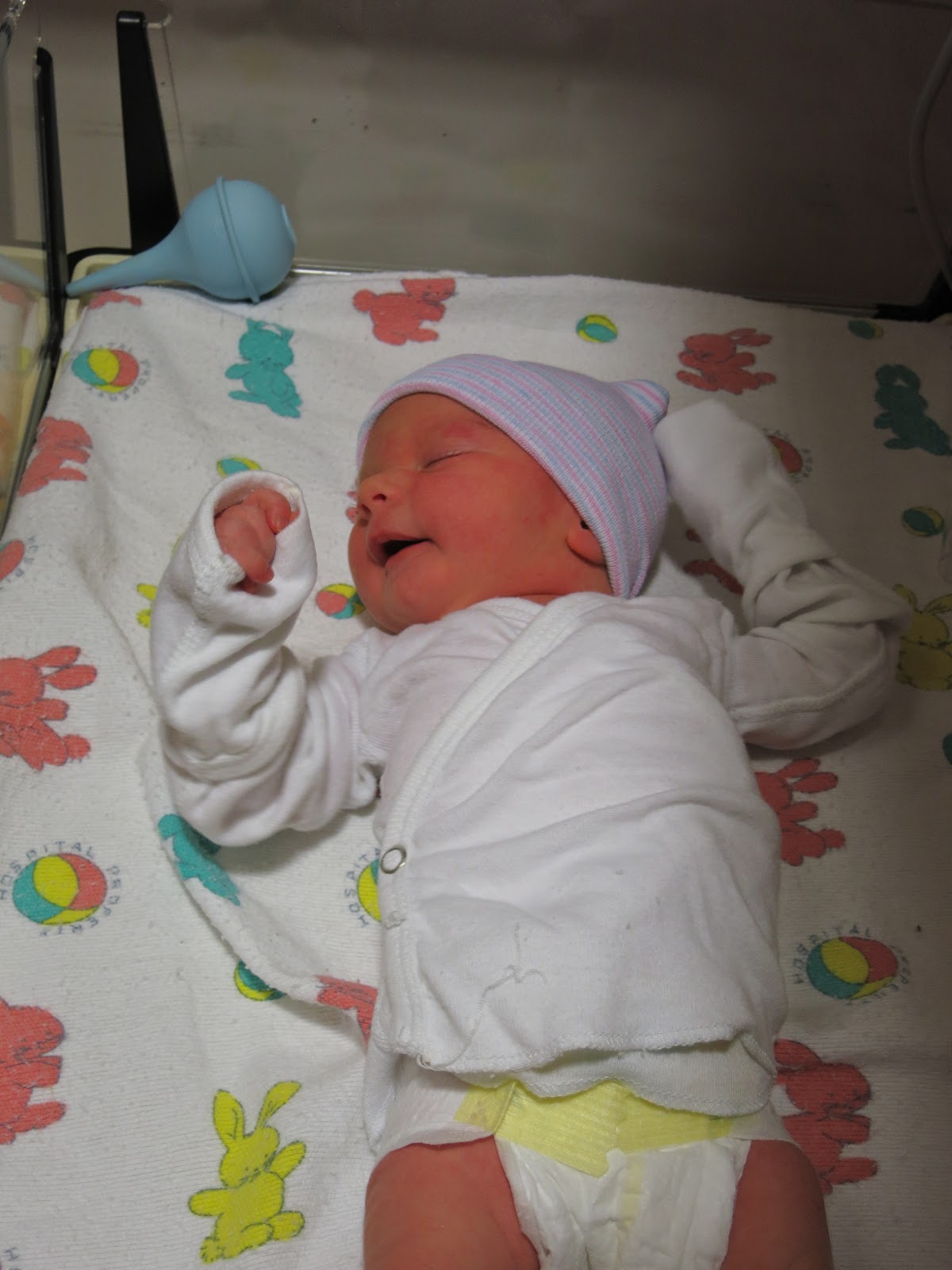
My sister was in labor for about 30 hours, but finally on Wednesday afternoon a healthy baby girl was born. I went to the hospital to meet the tiny bundle just a few hours later. She is beautiful- none of that squishy alien newborn look- just clear skin and exuding serenity. Here she is less than 4 hours old.
The nurse did the footprints, and made an extra copy just for the baby's 4-year-old big sister.
Here is one set of proud grandparents.
I am so thankful both mom and baby are doing well. Can't wait to spend more time with this tiny planet who is already a gravitational force within our hearts.

Saturday, February 16, 2013

Occupy Valentine's Day

This Valentine's Day marked 8 out of the last 10 years that I have spent the holiday working at a flower shop. What started as a few days of seasonal help blossomed into a decade of part- and full-time work, driving deliveries, bookkeeping, and learning to design floral arrangements. Even though the flower shop is in Bellingham and I live in Seattle, I can't stop myself from returning for the annual tradition of floral craziness.
(It's also a great excuse to visit old friends and try new restaurants that may have opened recently. I met up with a buddy and had a fantastic bowl of noodles in a konbu-bonito broth the new Dashi Noodle Bar. Besides being able to pick your meat, noodle type, and broth, they have an array of house-made condiments and accouterments for your bowl- kimchi, pickled radish, cilantro, soy water chestnuts, gingered bamboo shoots, etc. Then for lunch I had a real treat of getting to try the recently-opened Ciao Thyme's On.The.Side lunch-time cafe. It was a lovely respite in the middle of a busy day- pulled pork sandwich with spicy mayo, and Tunisian chicken salad with carrot-apple slaw, coriander vinaigrette, and house-made paneer cheese. Soooo good.)
So for most of my adult life, Valentine's Day has been characterized by creative work, good food, long hours, and spending time with dynamic, artistic women. Sure, there has been romance too- casual dates, boyfriends, singleness, dancing, circus shows, champagne picnics, burlesque. But in a way, the romantic side of the holiday seems an afterthought to the flowers. 
While I feel fairly neutral about the holiday, writer Anne Lamott is a little more opinionated. This piece was a Facebook status of hers last week, though I'm not sure if it was originally written for something else. Regardless, I love the sentiment and the reminder of radical self-love for any day of the year.

"We are all so pumped about Valentine's Day. You could cut the excitement around here with a knife.

My first plan was to celebrate by giving the kitty a flea dip, and overeating, but I think I've come up with a better idea.

Now, most of all us have some wonderful Valentine's Days over the years; or at least days that were not SO excruciating that we wanted to die. Which is at least a start. For instance, I had a wonderful man for seven years, who made me the most incredible little cards every year, but because he did not believe in climate science, or that there was any real difference between McCain and Obama, there were tiny tensions off and on the rest of the time.

I would estimate that approximately 17% of people enjoy Valentine's Day. Mostly, women will be given boxes of chocolates that they don't want and can't resist, and will be really mad at themselves for inhaling. Many people will be filled with resentment, anxiety, and guilt at having forgotten, or having shown up late, or having accidentally been having affairs with other people. Many people will feel a sheet-metal sense of loneliness and rejection. They will be comparing their insides with other people's outsides, especially those happy valentines actors in advertisements and commercials.

Most of the day, except for the lucky few, will be a nightmare.

So let's start an Occupy Valentine's Day movement.

Let's begin with the premise that another word for Valentine's Day is Thursday. And on Thursday, as an act of radical self-care, we will celebrate the miracle that a few people love us SO much, that we can go one, and bear up, no matter what; that even though they know the darkest, most human and intimate and disgusting stuff about us, they still love us. In fact, they love us more and more through the years. This is so wild, and is really my only hope. It is what salvation looks like. A handful of friends is the reason my faith in God is so deep. Because they ARE love; they (along with the dogs) are my most obvious connection to divine love in this joint, the looks of love on their faces.

Let's celebrate that all you need is love; and that God is Love and love is God; that Love will heal ALL, although unfortunately, maybe not on our time-- ie by Wednesday, right after lunch. But it will. When all is said and done, Love is sovereign on this earth. So let's go crazy with love on Thursday. If we want to be filled with loving feelings, all it takes is to do a bunch of loving things for others and ourselves. That's all it takes! You take the action, and the insight will follow-- that all you need is love. Crazy. We don't need to buy or be giving a single thing, and we don't need to eat anything we don't really want. We'll just give each other secret love gestures all day. Okay? You in?" (-Anne Lamott)

Monday, February 4, 2013

Master Composter, Part 2: What's So Great About Compost?

Last fall, I told you that I did the Master Composter/Soil Builder training through Seattle Tilth and the City of Seattle. I got all excited about making and using compost, but didn't really explain why. "So," you may be wondering, "what's so great about compost?"

Let's take a step back before I answer that. First of all, what is soil? That question stumped me when I first thought about it. "Dirt? Like, the ground. Rocks? Stuff."  It's funny, because we've been playing in the dirt since we were toddlers, but it's hard to say what it actually IS.

First, it's about 45-50% rock particles, meaning rock, sand, and inorganic matter. Second, it's about 45% air and water, or what we call pore space. Finally, it's 5-10% organic matter, meaning anything that was once alive (plants, animals, manure, etc). Notice that this organic matter accounts for a very small percentage of your average soil. But that small amount is extremely important, and it's not necessarily better to have more past a certain point. Small-scale organic farms may have up to 12 or even 15% organic material in their soils, but that's about as high as you'd want to go. Any more would make the soil too acidic and would not be beneficial for the plants. So what about buying a bag of compost, and planting your potted tomato in pure compost? Nope, not a good idea!

Here's what the Seattle Tilth website says about what compost is:

The natural biological cycle of growth and decay creates compost. A plant that has grown by gathering nutrients and water from the soil, energy from the sun, and carbon dioxide from the air, dies and becomes the raw material of the decay process. Microorganisms, worms, fungi and insects recycle materials from the decaying plants into their bodies and eventually back into the soil. Compost is the material that results from the decay process and is similar to organic matter in the soil.
Compost has many benefits for the soil. It improves drainage and aeration of clay soils, preventing water logged plants. It increases the moisture and nutrient holding capacities of sandy soils, and reduces drought damage to plants. Compost helps keep nutrients in the soil near plant roots, and it can immobilize and degrade pollutants. By preventing crusting on the top of the soil, compost can help seeds to sprout and water to soak in more easily.
Wowzers! That a lot of benefits. So not only does the compost provide nutrients, but it also makes the nutrients more available to the plants to use! It filters toxins! It invites beneficial insects and bacteria!

Compost also improves soil structure by moderating two extremes. On one end you have a really sandy soil- Perhaps you've watered a potted plant, and water just rushes out the bottom. You would have to water that plant more often, because the sandy soil is not holding on to moisture. That flush of water is also washing away nutrients more quickly. So adding a little bit of compost actually helps with both moisture and nutrient retention.

On the other extreme you might have a heavy clay soil- perhaps you've watered a plant, and the water hardly soaks in, just sits on the surface or runs off. When it finally soaks in, the soil stays wet for a long time. This soil type has the opposite problem- it will hold on to water for so long that a plant could get water-logged. Also, because clay tends to be very compact soil type, it is not as aerated as it should be, and plants aren't able to germinate or develop their root structure as easily as they could. So what's the solution? You guessed it, add compost! You can add compost to the top of the garden bed as a mulch, or work it in. Either way will ultimately provide similar benefits, and your garden will be much more water efficient, vital, and nutrient-rich if you do.

Another benefit of using compost is that it helps you keep materials from your yard on-site, and it turns a waste material into a resource. Here in Seattle we are lucky enough to have a large commercial composting facility, but that still means your leaves, grass clippings, and branches get hauled away in a truck, only to get brought back to the city in a truck, in a bag of compost that you then have to purchase. If you compost at home, you take out the middle man. Even more importantly, if you live somewhere with no commercial compost, then yard waste gets thrown into the garbage and eventually a landfill, putting valuable organic material into an anaerobic dump where it will break down and release carbon dioxide and methane gas. A simple yard-waste compost pile in the backyard can minimize that problem.

"Well," you might be thinking, "I'm not really into making my own compost, and I'm not a gardener. Why would compost matter to me?" Great question! It turns out that compost/organic matter in soil is critical on an urban planning level. Almost every winter there are heavy rains all around the country, and every year there is massive property damage as a result. There are more floods now than 50 or 100 years ago, but why?

It has to do with permeable surfaces in the city. Think about western Washington a century ago. There was little pavement compared to today, fewer buildings, and a lot more trees. When rain fell on our precipitation-happy corner of the world, it first hit leaves and pine needles, hanging out on branches for awhile before falling down on the ground. That forest floor was full of organic matter- fallen leaves, pine cones, decomposing logs, etc- that acted as a sponge, and held on to the water for awhile. In short, a couple inches of rain had a lot of area where it was absorbed, and it happened  s  l  o  w  l  y.
In contrast, a lot of land today that was once farmed or forested is now paved or roofed. A couple inches of rain will fall over square miles of impermeable surfaces, so where it can soak in gets overloaded. Plus, most urban soil that rain does hit is likely to have had much topsoil (with its spongy top humus layer) removed in the construction process, and be a lot of more compacted and less absorbent than it used to be. Both of these factors lead to run off and massive flooding in urban areas.
In Seattle there is a program called RainWise through Seattle Public Utilities. Being "RainWise" means doing your part as a resident to help manage storm water runoff, for the purpose of "reducing flooding, protecting property, and restoring our waters for people and wildlife". Their website has great little PDF fact-sheets, on all sorts of ways to be RainWise, including: planting trees, increasing permeable paving, disconnecting downspouts, installing cisterns, building rain gardens, and my favorite, improving soil with compost. I think any amount of increased compost use on a residential level is a great thing, though it's important to note that compost is also used on a commercial scale. Various blends of compost are available from Cedar Grove and used by commercial construction companies as well as the WS Department of Transportation in building projects, erosion control blankets, living walls, mulching, meeting soil quality regulations, and many other things I'm sure.

There is a ton more I want to say about the benefits of compost (we didn't even touch on compost biology!) but that's all for today. Stay tuned for the next compost post- "What's the difference between hot and cold compost?" Coming soon!

Thursday, January 24, 2013

A Winter Florida Visit

My dad moved from Washington state to Florida almost 9 years ago. The first time I went to visit him was in August of 2004, and I arrived just in time to experience my first hurricane, Hurricane Frances. After that, I vowed to never visit Florida during hurricane season, and instead have always gone in January or February.

Now is a great time of year to leave the Pacific Northwest. The bustle of the holidays is over, and while the days are getting longer, spring still feels like a long ways off. I find that even a week in a warm place can do wonders. The morning I left it was a little foggy in Seattle, but once we were air born it was crystal clear over the Cascade Mountains.
I flew into Tampa, and even the late night air was warm and balmy. In the morning, the sky was blue and I sat on the back deck drinking coffee with my dad and his girlfriend. They recently moved into a condo community called Chelsea Meadows, and my dad likes to proclaim after waking up, "It feels like a Chelsea Morning!" And then he puts on the Joni Mitchell song, and we have a second cup of coffee and start chipping away at catching up on the last 3 years of not seeing each other.

Later that morning, unfortunately, the clouds rolled in, the wind picked up, the temperature dropped, and it rained most of the rest of the day. The unusual winter cold front stayed for the whole week I was there, after consistently sunny weather in the 70's and 80's right before I arrived. It changed our plans a bit, but our spirits could not be dampened. Despite the cold, it was still so refreshing for me to be in a warmer climate, where cherry tomatoes are still on the vine and strawberries are about to be ripe. Where bright oranges hang heavy on trees. Where snapdragons, hibiscus, bougainvillea, and poinsettias are blooming. Where I get to see wildlife that's different from the Northwest, like Sandhill Cranes and wild turkeys.

We took a day trip over to the eastern side of the state to visit my dad's sister. We drove over with my other aunt and her daughter, who are both lovely people who I wish I could see more of. It was just a hop, skip, and a jump from Titusville to the Atlantic Ocean, so we took a side trip to Cape Canaveral National Seashore.

Otherwise it was a very mellow trip, just having a nice chance to hang out with family. We chatted, made meals, listened to music, went for walks, did car maintenance, watched movies, and soaked in hot tubs... which is just how some vacations are meant to be.

Sunday, December 30, 2012

A Merryish Christmas

Well, another Christmas has come and gone. I guess it's still the "holiday season" since we haven't reached New Years yet, but I'm glad the flurry is winding down.

Last week on Wednesday and Thursday, I helped set up for the Fremont Art Council's "Feast of the Winter Solstice." The feast is a huge community potluck featuring local art, live music, dance performances, and a solstice ritual. It was quite an undertaking to transform an empty warehouse into a beautiful, festive celebration space. Volunteers decorated like crazy, hanging chandeliers, banners, and lanterns, making a tea-room/chill area, painting a Mayan mandala on the floor, setting up a stage and altar, and hanging cedar boughs EVERYWHERE.

When I got there Friday after work, I couldn't believe how lovely and ambient the completed space was. There was a massive amount of food- even taking tiny spoonfuls, I couldn't try everything. (Photos by Matt Freedman)


But while all this was happening, my mind was on my brother and his family over in Spokane. His girlfriend was less than 7 months pregnant, but we had just found out that day that they needed to deliver the baby early due to preeclampsia. It was shocking, to think they were expecting two more months to get ready for their first child, but instead would be parents to a preemie at 7:30 that night. I kept checking for updates, and was so relieved to learn that both the baby and her mom were doing well. (Photo by Keshia Yvette Clements)
Both my brother and his girlfriend seemed so brazenly positive, and sometimes maybe that's all you can do. You love what you love, even when it's not perfect or what you originally envisioned. I found it very comforting that she was born on the Winter Solstice, as if the universe was saying, "It doesn't get any darker than today! There are SIX months of coming light, and you're going to be fine little lady!"

At this time of year there is a lot of hope, optimism, and sense of abundance. We make so much food! We give to local charities! Presents sit piled under the tree! We will make awesome changes in the New Year! Maybe that's why, when things aren't looking so grand, they feel especially painful. Scarcity and inequalities stand out in harsh, harsh contrast. I almost started crying seeing the homeless man asking for spare change on the corner.

That weekend, a lot of old high school friends were back in town for Christmas. I met up for beers with one who recently moved to the east coast. We were reminiscing about high school, and she said how hard it was for her. "I didn't really have any friends coming from a different school... but I guess I hid it well." She talked about eating lunch alone in the library, at the end of a row of stacks. And how being seen by other students was like a mutual confession- they had "caught" you, but they were there too in their loneliness.

After that I headed to a bar in Greenwood to meet a big clan of old friends and acquaintances. I didn't feel like drinking- maybe the trippiness of the reunion was enough mental altering. I wanted to catch up, and was curious how people were doing, but really didn't want to make small talk. I wanted to joke and dance and sing along to the karaoke. It was like being back in the mid-to-late nineties, with people singing Weezer and the Offspring and Alanis Morissette. There were so many memories wrapped up in those melodies. Then a group sang "What's Up?" by 4 Non Blondes, and the whole bar was belting out the chorus.

And so I cry sometimes when I'm lying in bed
Just to get it all out what's in my head
And I, I am feeling, a little peculiar
So I wake in the morning and I step outside
I take a deep breathe and I get real high
And I scream at the top of my lungs
"What's going on?"

Even though that song was a favorite way back in middle school, you're never too old to sing your heart out. I had already had a sore throat and now it was worse. But something had been released. On Monday I worked early, barely able to talk, then went running, then had to run errands. I really didn't want to drive around in the Christmas Eve madness, but I had forgotten to get strawberries and I REALLY wanted to make these little santas. (Photo by Cheyenne Vollrath)
By the time I got home and showered and made a big salad, I was exhausted. But I drove out to Lynnwood and tried the best I could to be festive. My family has a tradition of singing in a circle around the Christmas tree, and the force of tradition is strong. So strong that I couldn't allow myself to NOT sing, despite my seriously pained throat.

On Christmas morning, I had a nice time at my mom's house with my step-dad and brother. It was the smallest Christmas morning I've ever had though. I have 5 siblings, and am used to most of them being there, along with their partners/spouses and kids. This year, by comparison, it felt empty and disjointed. All of us kids are getting older, having more kids, and wanting time with that new nuclear family. So I guess it is just the natural progression of things, but it means traditions are changing. And that's hard, especially at Christmas. I read a great NY Times article called Our Family Christmas, Rescinded about that, though more about the mom changing tradition than the kids. It had some lines that were spot-on:

We want our comforting traditions to stay suspended in sap while our families constantly revise their understanding of us like software that updates automatically. Instead, traditions crumble and nostalgia yields to melancholy, but our identities, to our families, are as fixed and stagnant as fossils behind glass.
Anxious to demonstrate how mature and flexible we’ve become, we return to our birthplaces and we’re cut down to size, encountered as predictable once again. Disappointment and longing well up on a last-minute trip to the shopping mall...

And so I tried my hardest to be flexible and accept change. I sorely missed my sisters but also remembered that it was a blessing to have sisters I loved so much. And I remembered my friend Lindsey's advice from years ago: "Seriously Amber, you don't have to make everything so goddamn symbolic!" On one hand, Christmas is just one lavish day of the year, and any complaints about it sound like First-World problems. On the other hand, it holds place as some sort of family litmus test or functionality microcosm, so anything going wrong feels cataclysmic on a bigger life scale. But I'm taking this Merryish Christmas for just what it is, feasts and tiny beautiful babies and scream-singing and not talking at all and crying and laughing and figuring out how to go up from here next year.

Wednesday, December 19, 2012

This Little Light of Mine

Hanukkah just ended. It's almost Winter Solstice. Then right after that it's Christmas. This all means shopping and trees on top of cars and references to religions and slews of holiday parties and too many cookies and more stamp designs than usual at the post office. 

But what strikes me the most, and what these three holidays share, is the power of light. Remembering lights that miraculously burned longer than there was fuel for. Remembering that short, dark days will soon get longer. Remembering that a bright star led the way to a divine being in the most mundane setting. No matter what you believe, these holidays remind us of hope and light in the face of struggle and darkness. 

And let's face it, this is the time of year we need to be reassured. Between the cold, the dark, the holiday pressures, and the excessive sugar consumption, I've been feeling a bit out of balance. I'm trying to enjoy the moment and get in the holiday spirit, so I've finally been doing a little more cooking. I had never made challah, but got inspired to make my first loaf when I went to a friend's Hanukkah dinner. I saw their cute baby, and we lit the menorah and they sang songs and we had a delicious meal in good company.
A couple days later, my roommates and I hosted a holiday potluck, the theme: booze-infused food. That's right folks, only foods containing some amount of alcohol. Best potluck idea ever, right? There was pasta with a vodka-spiked veggie tomato sauce; porter-boiled hand-made family-farm sausages; chips with tequila salsa; steak, onion, and brussel sprouts in a red-wine reduction; and lots of desserts. I made these Coconut Ganache Bourbon Balls, and some one else made an incredible Whiskey Chocolate Mousse.

It was actually the first time we've had a joint gathering with friends of all 4 of us roommates. People mixed and mingled, drank and ate, and we all had a great time. But other nights, things don't always go so well. I've wanted to go to Santarchy (organized pub crawl of people in Santa costumes) ever since I first heard about it last year. The day came, and I had no one to go with. Every one was busy or not interested or out of town, so being the independent and willful lady that I am, I decided to go alone. I went to a family dinner, and by the time I got downtown in costume it was toward the end of the event. But Santas were still around, so I went into the designated Pike Brewing Company sure that I would meet people to talk to. 

I stood at the bar waiting to get a beer. And waited. And waited. It would have been fine if I were with friends, but being by yourself when every one else has been drinking since noon, and it's too crowded to get a drink after 15 minutes, just isn't a rockin' good time. Just then, one of my best friends who lives in Austin called. We've been playing phone tag and trying to talk for awhile, so of course I had to answer. I walked over to a stairwell away from the bar where it was a little quieter, and got engrossed in conversation. Life paths. Changing friendships. Love. Money. Passion and purpose and careers. We talked about everything as I sat there alone in that stairwell, dressed as Ms. Claus while groups of drunk Santas stumbled past. Yep, I drove all the way downtown, in costume, to talk on the phone.

At that point I wasn't interested in going back to the bar, so I headed to a friend's Holiday Party. It was a wonderful party as usual, but my heart wasn't really in it. I was tired of trying to do everything alone. I got disparaged for bringing my own beer ("Uh, you really brought store-bought beer to a party with homebrew?" *rolls eyes at me*). There was a solstice ritual by the fire, and I didn't even have it in me to sing along to the song. Not because it wasn't a great song, or great people coming together in a great way in community. But because it just wasn't MY community. The words from a David Whyte poem popped in my head, the last few lines from Sweet Darkness

You must learn one thing:
The world was made to be free in.

Give up all the other worlds
Except the one to which you belong.

Sometimes it takes darkness and the sweet
Confinement of your aloneness
to learn

anything or any one
that does not bring you alive

is too small for you.

So I went home. I reflected on the good phone conversation and watched a movie and drank tea and that was just the Saturday night I wanted. I'm accepting the darkness, the introspection, the uncertainties. I'm also looking for my beacons. I'm being as honest as I can. I'm smiling at Christmas lights, the unspoken, collective lifting. I'm trying to shine whatever light of my own that I can manage.